
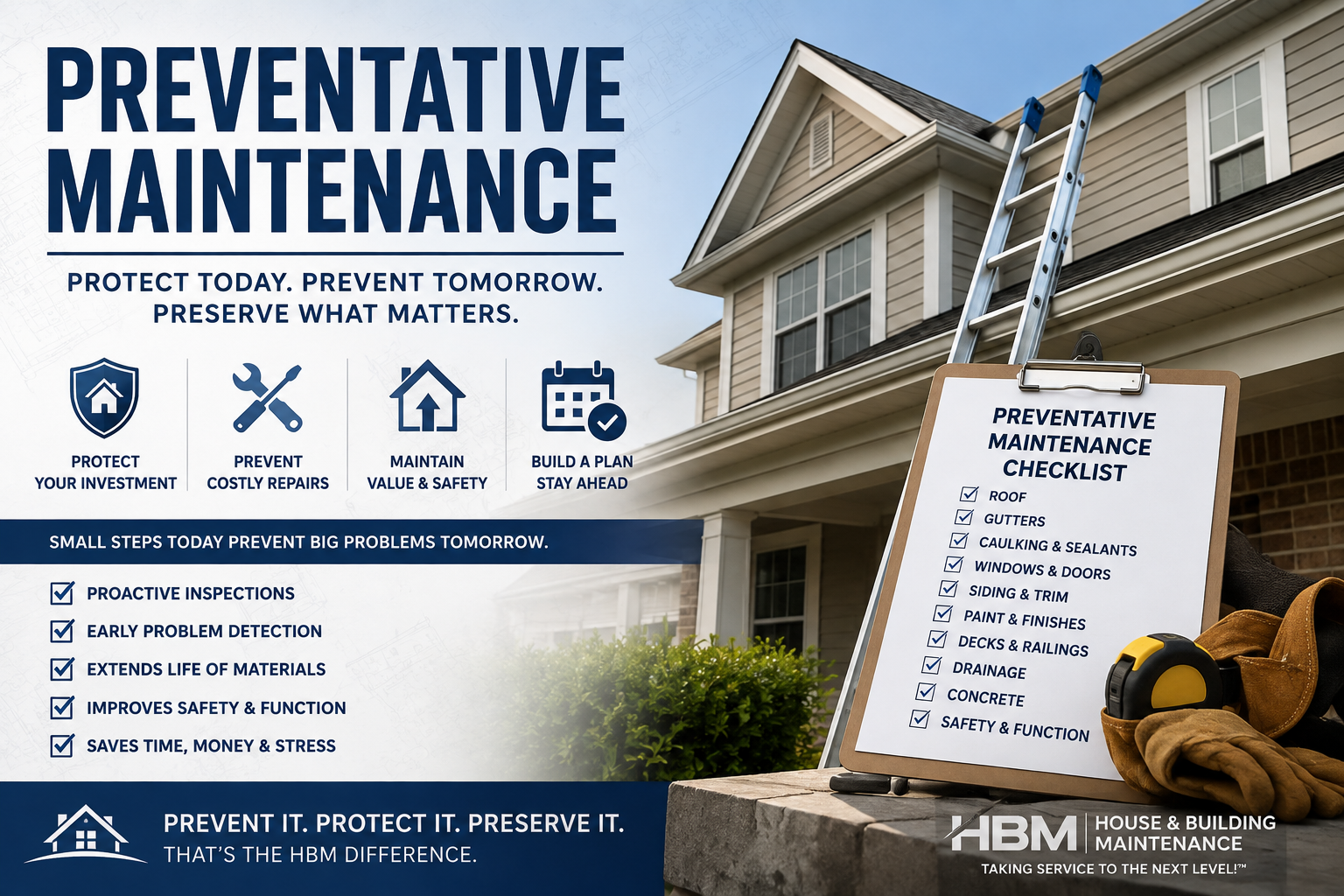
Why Preventative Maintenance Saves Thousands
Most expensive home repairs don’t begin as expensive problems.
They begin as small maintenance issues that quietly ask for attention.
A clogged gutter.
A cracked bead of caulk.
Peeling paint.
A loose piece of trim.
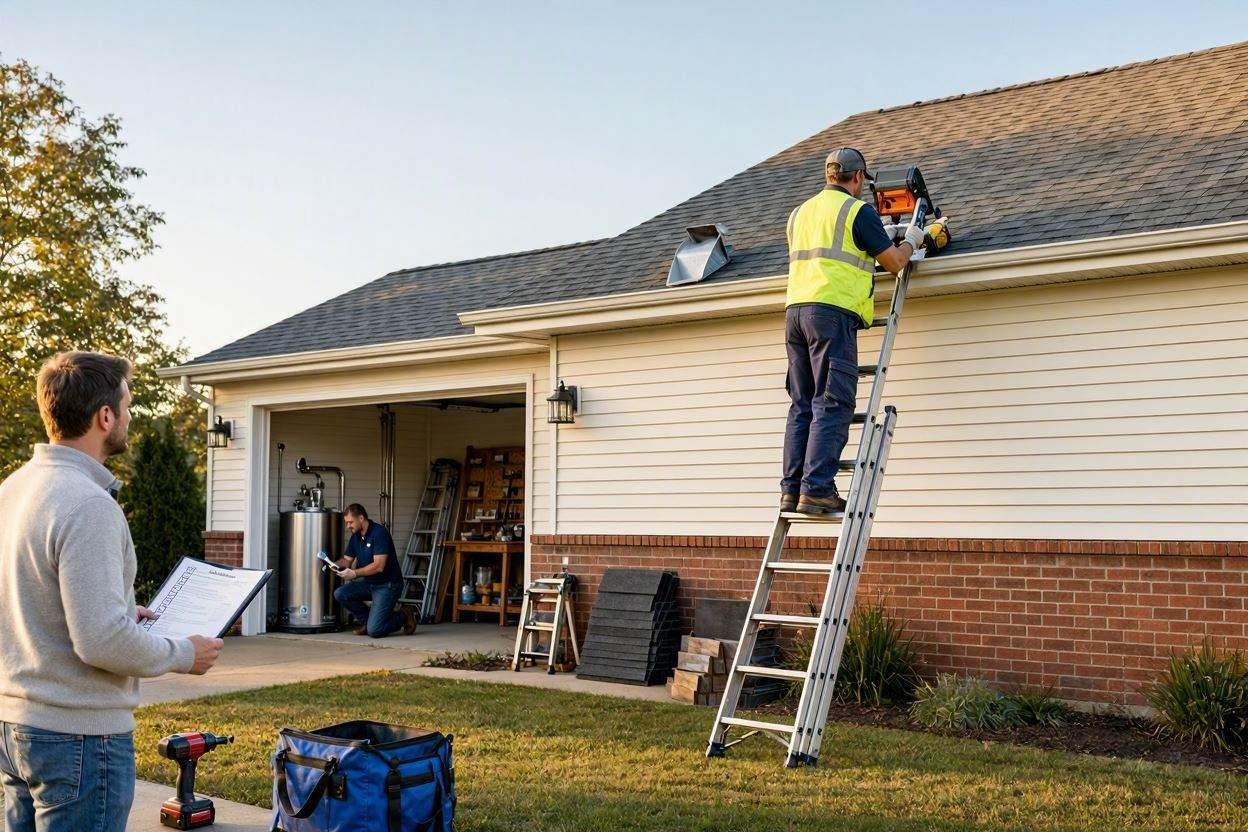
A small area where water has begun finding its way into your home’s protective exterior.
Individually, these problems rarely seem urgent.
Collectively, they’re responsible for thousands of dollars in avoidable repairs every year.
That’s why preventative maintenance isn’t about spending more money.
It’s about spending a little now so you don’t have to spend a lot later.
After more than 35 years working on homes throughout the Chicagoland area, I’ve learned one simple truth:
Maintenance almost always costs less than repairs.
What Is Preventative Maintenance?
Preventative maintenance simply means addressing small maintenance items before they have the opportunity to become major problems.
Think about changing the oil in your vehicle.
Nobody changes oil because the engine has already failed.
They do it because regular maintenance helps prevent costly engine damage later.
Your home works the same way.
Replacing worn caulking before water enters the wall.
Cleaning gutters before they overflow.
Touching up failing paint before wood begins deteriorating.
Inspecting your property after severe weather.
These small actions help preserve the systems designed to protect your home.
Why Small Problems Become Large Repairs
One of the biggest misconceptions homeowners have is believing damage appears suddenly.
It rarely does.
Moisture enters through a tiny gap.
Sunlight slowly breaks down protective coatings.
Wood absorbs water over time.
Freeze-and-thaw cycles gradually enlarge small cracks.
The process is slow.
So slow, in fact, that many homeowners don’t notice anything has changed until significant damage has already occurred.
The repair then becomes much larger—not because the original problem was severe, but because it was allowed to continue unchecked.
Moisture Never Takes a Day Off
If there’s one thing I’ve learned over the years, it’s this:
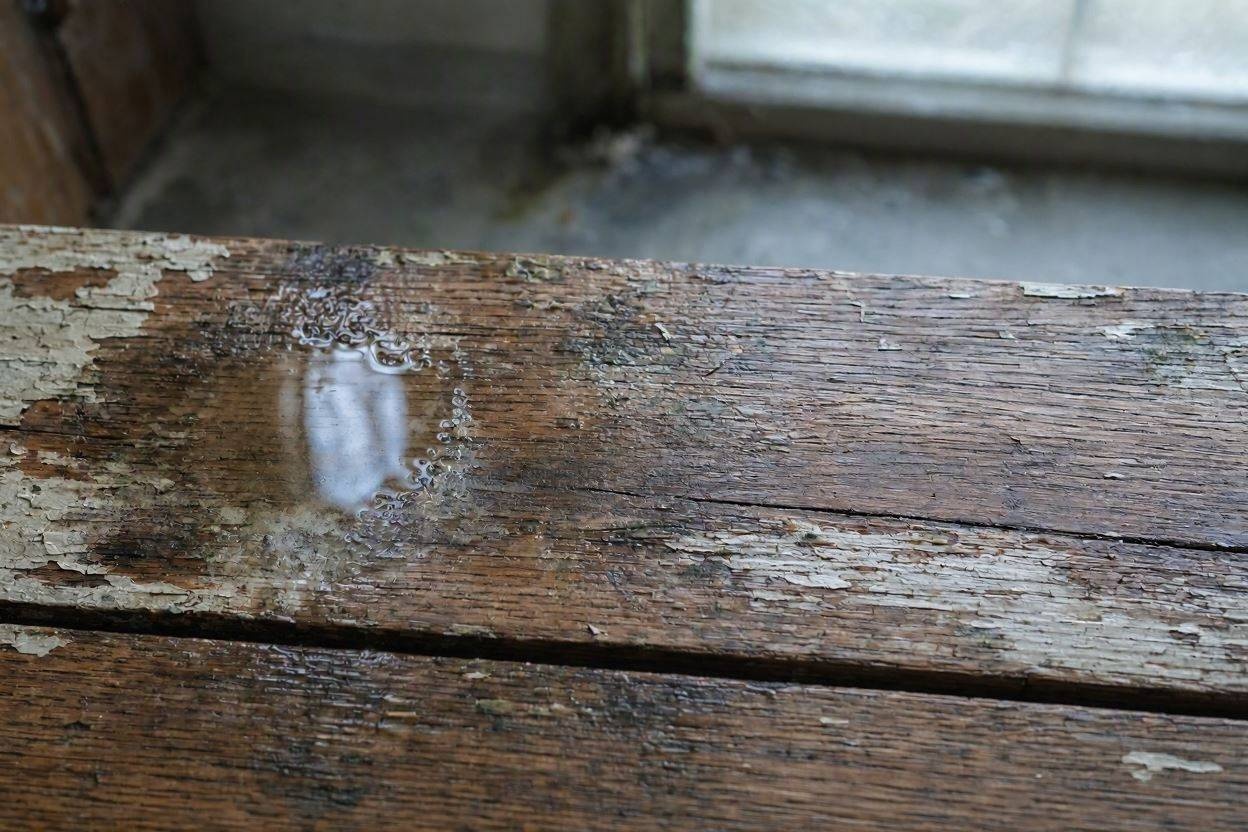
Water is incredibly patient.
It doesn’t need a large opening
It only needs an opportunity.
Water is incredibly patient.
It doesn’t need a large opening.
It only needs an opportunity
Once moisture finds a way behind paint, siding, trim, or masonry, it begins affecting the materials underneath.
What started as routine maintenance may eventually require replacing wood, repairing drywall, repainting entire sections, or correcting structural damage.
That’s why early detection matters.
The Financial Advantage of Routine Maintenance
Preventative maintenance helps homeowners in several important ways.
- Extends the life of exterior finishes.
- Reduces unexpected repair costs.
- Helps preserve property value.
- Improves energy efficiency.
- Reduces moisture-related damage.
- Allows repairs to be planned instead of rushed.
- Provides peace of mind.
Homeowners who inspect their property regularly are rarely surprised by major repairs.
Instead, they make smaller, planned maintenance decisions throughout the year.
Property Maintenance Is an Investment
Many people think of maintenance as another household expense.
I prefer looking at it differently.
Every dollar spent protecting your home is also protecting the value of one of your largest investments.
A properly maintained home often:
- Lasts longer.
- Performs better.
- Requires fewer emergency repairs.
- Creates a better first impression.
- Holds its value more effectively.
Maintenance isn’t simply preserving materials.
It’s preserving your investment.
How Often Should You Inspect Your Home?
One complete exterior inspection each season is a great place to start.
Spring.
Summer.
Fall.
Winter.
Each season presents different weather conditions and different opportunities for maintenance.
The more familiar you become with your property, the easier it becomes to recognize when something changes.
Small changes noticed early often prevent expensive surprises later.
🔎 What You Can Do Today
Take fifteen minutes this weekend and walk around your home.
Pay special attention to:
- Exterior caulking
- Windows and doors
- Gutters and downspouts
- Peeling paint
- Trim
- Visible cracks
- Drainage around the foundation
Take photographs of anything that catches your attention.
Those pictures become valuable reference points during future inspections.
Continue Your Property Asset Protection™ Journey
Preventative maintenance is only one part of protecting your home.
For a complete guide to identifying early warning signs before they become expensive repairs, read our flagship homeowner guide:
👉 6 Reasons You Should Inspect Your Home Today Instead of Paying for Big Repairs Tomorrow
This comprehensive guide explains why routine inspections are one of the smartest investments any homeowner can make and shows you what to look for before small issues become costly repairs.
Protecting Your Property Starts With a Conversation
Thank you for spending a few minutes with us today. We created the HBM Knowledge Center™ for one reason: to help property owners better understand, maintain, and protect one of their biggest investments.
If something you read raised a question about your own property—or you’re simply not sure what deserves attention first—you don’t have to figure it out alone.
Start a conversation with HBM.
Tell us what you’re seeing, what you’re concerned about, or what you’re trying to accomplish. We’ll help you determine the right next step.
Ready to Protect Your Investment?
Fill out our Instant Contact Form today and let’s start the conversation.

Kent Brown
Founder/Property Asset Protection Advisor
House & Building Maintenance
Protecting Properties. Educating Owners. Building Trust.
Taking Service To The Next Level!™
Leave a Reply